The longer story.
I’m a final-year Computer Science and AI student at the University of Bath, on the integrated masters with a placement year, and I’m looking for a graduate software role starting in 2027. What I can point to is a year of production work at Kontron, two client sites in live use, and research projects documented well enough for somebody else to check them. I ask a lot of questions early, and I would much rather find out something is wrong now than defend it later.
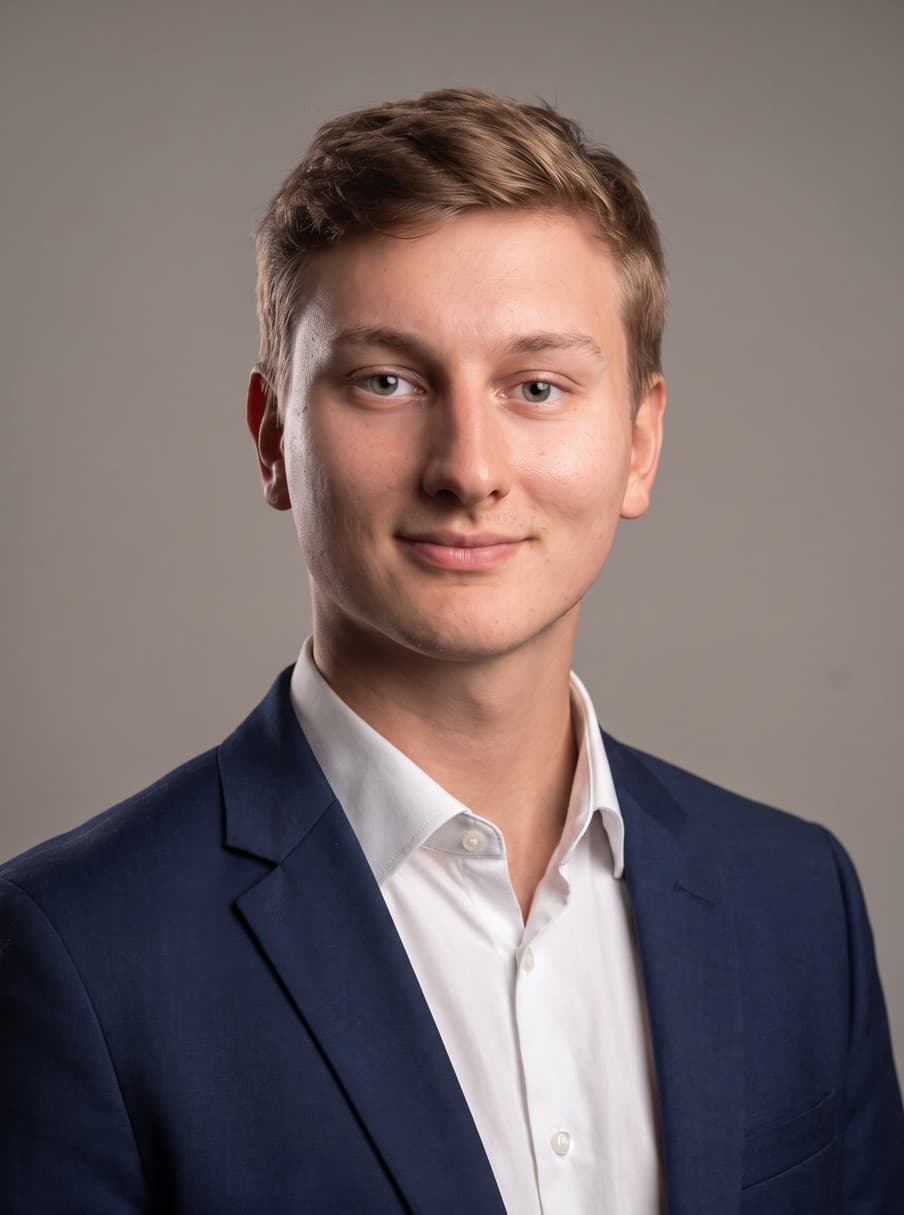
How I got here
I took Maths, Computer Science and Physics at A-level, alongside an EPQ asking whether computer-aided diagnosis was ready to be used at scale. That question, a technology that works in a paper and then has to survive contact with practice, is one I have kept coming back to. The brain tumour detection project on the work page is the same question five years later with better tools.
Bath came next: three years of study so far, a placement year in the middle, and a final year to come. The dissertation was a crossover study on professional bike fitting, which is written up on the work page as far as the paper allows.
The placement year
I spent a year at Kontron, formerly Bsquare, on their device management product, working across development and QA. I started on bug fixes in Angular and TypeScript, moved on to delivering full features, and documented more than fifty defects on the QA side.
The part I am most pleased with was not a feature. Development and dev-ops were running different test suites, so the two sets of results disagreed and neither was fully trusted. I built a Jenkins runner that let anyone select a set of tests and get results back in one format, and both teams moved onto it. The code and the screenshots are covered by the agreement I signed, so I can describe that work but not show it.
Rowing
I rowed in the British Rowing Performance Development Academy and have medals from the Senior British Championships and from BUCS. This year I moved to sweep for the university squad for the first time and was selected for the first boat. We did not qualify for Henley and we missed the A final at BUCS by a fraction of a second, so by results it was not a successful season.
It is on the page for the schedule more than the medals. Twelve or more sessions a week alongside a degree and a full-time placement is a fair record of what I can keep up over a long stretch, and a squad is a good place to learn how to be useful to people who are having a bad week.
I was also elected Performance Sport Officer on the Students’ Union Sports Executive, which means representing performance athletes across the university rather than only the rowers. The seat sits on the Blues Committee and works with the sports department on how performance sport is run.
Outside that
Fifteen years of football, including captaining sides and running the social side of the department team. Hiking, guitar, badminton, and French and German that are both improving slowly. I spent a month travelling in Peru on my own, which is the trip I would do again.
MComp Computer Science and Artificial Intelligence
University of Bath. Integrated masters with placement year. Final year 2026/27.
- First class in all three years of study
- 82% dissertation
- A*A*A* at A-level in Maths, Computer Science and Physics, plus an A* EPQ
What I’ve studied recently.
Final-year modules, in brief.
Reinforcement Learning
Built and compared reinforcement learning methods on Atari Space Invaders, then researched intrinsic motivation as a second piece.
Natural Language Processing
A full sentiment classification pipeline on IMDb reviews, tuned end to end.
Cyber Security
Made one real card purchase, captured it, and took the whole thing apart. That single checkout reached 49 separate domains over 766 requests, which I grouped into six categories and traced from the basket call through to the payment endpoint and the bot-detection telemetry riding alongside it.
Digital Business Innovation
Traced Red Bull's route from a Thai tonic to a media company that happens to sell drinks, and which of its digital moves actually carried the growth.
Entrepreneurship
OneGuard, a five-person venture selling AI-detection training to financial firms. Problem research, two surveys, paper and Figma prototypes, then an investor-style pitch. Written up as a case study.
Where the work has happened.
A year on the Kontron Device Management product, across development and QA. Shipped Angular and TypeScript features from first bug fix to full sets, documented more than fifty defects, and built the Jenkins test runner that finally got dev-ops and the dev team running the same suite.
Built the visibility model behind NASCAR sponsorship value. A full Cup Series season of race results joined to Reddit, YouTube and news coverage, scored on published weights, then costed to find which sponsor buys the most exposure per dollar. Finished with a written report and a deck presented to the team.
Elected to the Students' Union Sports Executive to represent performance athletes. The seat carries their case into exec meetings, sits on the Blues Committee, works with the sports department on how performance sport is run, and drives student turnout at BUCS fixtures and showcase events.
Led campus tours and virtual open days for the computer science course, and mentored first-year students through their first months.
Microcontrollers and IoT security in Cambridge, where the interest in systems that have to be trustworthy started.
What I reach for.
The list is here because people ask for it. The case studies are the better guide to what I have actually used and why.